OnCore Login

Member Features

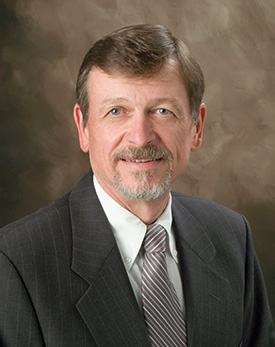
Member Feature: Fred & Pamela Buffett Cancer Center

Sept. 15, 2016:

Investigator spotlight

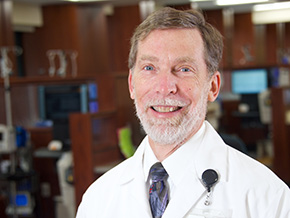
jean-grem-oncology-2013Jean Grem, MD, is professor of medicine and joined the University of Nebraska Medical Center (UNMC) in 2003. Prior to joining UNMC, Dr. Grem was senior investigator at the National Cancer Institute, in Bethesda, Maryland since 1986. She became the gead of the Gastrointestinal Malignancies Division, Cancer Therapeutics Branch at the National Cancer Institute in 2001. Dr. Grem is known nationally as an expert in gastrointestinal malignancies and is currently exploring several novel therapeutic approaches in both colon and pancreatic cancer at UNMC including targeting metabolic alternations to improve survival in pancreatic cancer as project four in UNMC’s pancreatic SPORE.
Read More

Member Feature: Robert H. Lurie Comprehensive Cancer Center of Northwestern University

July 1, 2016:

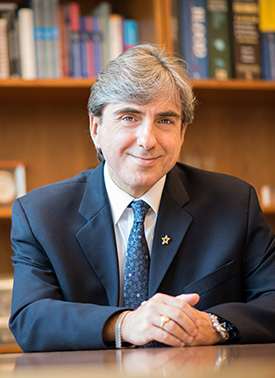
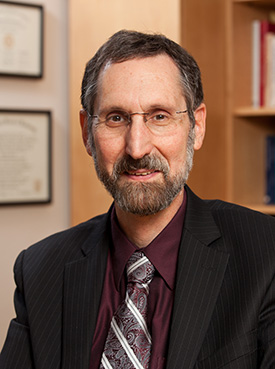
Leonidas Platanias, MD, PhD, director of the Robert H. Lurie Comprehensive Cancer Center of Northwestern University

A conversation with Leonidas Platanias, MD, PhD, Director of the Robert H. Lurie Comprehensive Cancer Center of Northwestern University, which is a member of the Big Ten Cancer Research Consortium.

Q: How do you think cancer research will change in the next 10 to 20 years?

This is an exciting time in oncology, and we see tremendous opportunities to advance cancer prevention, diagnostics and therapeutics in ways that were unimaginable just a few years ago. Immunotherapy and genomics, two of the most compelling areas of research today, will provide unprecedented opportunities to control – and in some cases cure – treatment-resistant cancers.

The Lurie Cancer Center OncoSET (Sequence, Evaluate, Treat) Program, launched in 2015, combines genomic sequencing and molecular diagnostics to identify new, individually tailored treatments and clinical trials. We recently initiated the Lurie Cancer Center OncoSET Clinic, under the leadership of Massimo Cristofanilli, MD, Associate Director for Precision Medicine and Translational Research. The OncoSET Molecular Tumor Board, a multidisciplinary group of physicians and scientists, reviews the results and recommends a personalized treatment plan. To the best of my knowledge, this is the first site-agnostic, molecular pathway-driven clinic in Chicago.

Read More

Member Feature: University of Michigan Comprehensive Cancer Center

April 1, 2016:

A conversation with Theodore Lawrence, MD, PhD, director of the University of Michigan Comprehensive Cancer Center, professor and chair of the Department of Radiation Oncology, and a member of the Big Ten Cancer Research Consortium.

Q: How do you think cancer research will change in the next 10 to 20 years?

There has never been a more exciting time to do cancer research.

Over the next 10-20 years, I expect that immunotherapy will continue to advance. We’ll start to see greater clarity in patient selection and in combining immunotherapies with other therapies.

Metabolomics is another exciting area of research, and I anticipate that the biological discoveries in this area will begin to be translated into new treatments. Likewise, our growing understanding of the interaction of the microbiome with the causes and treatment of cancer will produce new ways of decreasing the toxicity and increasing the efficacy of cancer treatments.

Biostatistics and bioinformatics are already central to much of our research, and the contributions of these fields will continue to grow. We’ll see a greater emphasis and opportunity to use mobile technologies to record patient reported outcomes.

There will be challenges as well. Our increasing understanding of tumor heterogeneity means that almost all diseases are becoming “orphan” diseases. When I was a medical oncology fellow and a radiation oncology resident, lung cancer was either “small cell” or “non-small cell.” Therefore, you could design a single trial that would apply to large group of patients. Now our protocols are, for example, “erlotinib-resistant EGFR mutated lung adenocarcinoma.” That’s so much more specific of a patient population, and we expect to accrue only a few patients a year. But it’s the same effort in protocol writing and start-up. While I am excited that our outcomes continue to improve, it is certainly a challenge to our clinical trial implementation. Read More
Member Feature: Michigan State University Breslin Cancer Center

Feb. 1, 2016:

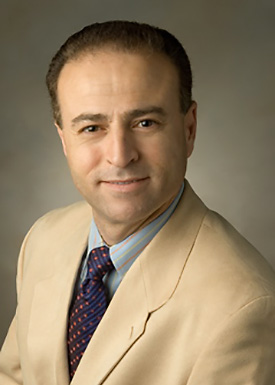
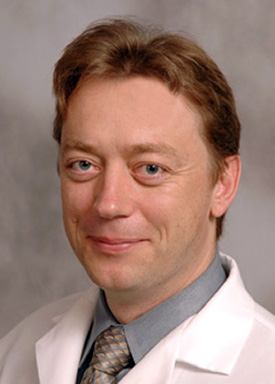
A conversation with Anas Al-Janadi, MD, associate professor of medicine at the Michigan State University College of Human Medicine, chief of the Division of Hematology/Oncology and medical director of the MSU Breslin Cancer Center, a member of the Big Ten Cancer Research Consortium.
Q: How do you think cancer research will change in the next 10 to 20 years?

We believe strongly that collaboration is the best possible way to conduct cancer research without expanding the cost, particularly at a time when government funding for medical research has remained stagnant. But collaboration offers many other benefits besides saving money. Read More

Member Feature: University of Illinois Cancer Center

Jan. 4, 2016:

A conversation with Arkadiusz Dudek, MD, PhD, professor of medicine, hematology/oncology, at the University of Illinois College of Medicine. Dr. Dudek is a member of both the University of Illinois Cancer Center and the BTCRC Steering Committee.

Q: How do you think cancer research will change in the next 10 to 20 years?

Portable technology is changing research every day. From apps to scanners, information transmission is faster than ever before. In development at the University of Illinois is a portable blood drop test for lung cancer screening. The way a drop of blood can alter the course of daily treatment for a diabetic, will hopefully have the similar path to recognize lung cancer at earliest stage and aid with patient selection for screening with low dose spiral computed tomography. The UI Cancer Center also works very closely with SAWBO, Scientific Animations Without Borders, which is a global media depository that develops universal tools to understand medical problems, in this case education about a need for cancer screening. This portable technology is another instrument that has the potential to expand comprehension in innumerable ways. Read More

Member Feature: Holden Comprehensive Cancer Center

Dec. 1, 2015:

A conversation with George Weiner, MD, director of Holden Comprehensive Cancer Center at the University of Iowa and the C.E. Block Chair of Cancer Research and professor of internal medicine at the University of Iowa, which is a member of the Big Ten Cancer Research Consortium. Dr. Weiner has led a statewide collaborative to reduce the burden of cancer in Iowa, served on committees within the National Cancer Institute, and is currently serving a two-year term as president of the Association of American Cancer Institutes (AACI), which comprises 92 leading cancer research centers in the United States.

Q: How do you think cancer research will change in the next 10 to 20 years?

Rapid changes in cancer research are taking place in multiple dimensions at the same time. We are learning more every day about the incredible complexity of cancer genetics, cell biology, and how cancer interacts with normal tissues in the body including with the immune system. The big challenge is to continue to accelerate progress in our ability to understand cancer, and to use the information we have found to help as many patients as possible. This is requiring a new team approach to cancer research that includes basic cancer biologists, experts in informatics, clinical investigators, clinicians and many others. These teams are necessary to sort through the complexity of cancer and develop new approaches to cancer prevention, early detection and therapy, and to use the resulting new knowledge to select the right clinical approach for each individual patient. Read More

Member Feature: IU Simon Cancer Center

Nov. 2, 2015:

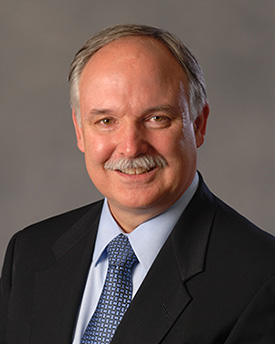
A conversation with Patrick J. Loehrer, Sr., MD, director of the Indiana University Melvin and Bren Simon Cancer Center, which is a member of the Big Ten Cancer Research Consortium:

Q: How do you think cancer research will change in the next 10 or 20 years?

Cancer therapy, like much of medicine, is quite empiric. Understanding greater details of what drives tumors to grow will be greatly enhanced in the next several years. We are in the onset of the age of cancer informatics and immunotherapy. The information overload will need to be simplified into bite-size pieces of relevant information that can better identify the complex biological engineering of the cancer cell that nature has designed. Immunotherapy is already unleashing tremendous new opportunities, especially for highly mutated tumors from the therapeutic armamentarium. We have so much more to learn about the great potential and the limitations of this approach. These are truly exciting times. Read More

Member Feature: Purdue University Center for Cancer Research

Oct. 1, 2015:

A conversation with Timothy L. Ratliff, PhD, Robert Wallace Miller Director of the Purdue University Center for Cancer Research, which is a member of the Big Ten Cancer Research Consortium.
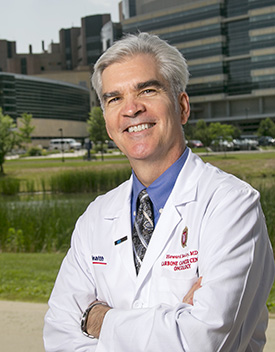
Q: How do you think cancer research will change in the next 10 or 20 years?

There will be a much greater focus on individual care, i.e., personalized medicine. I am hopeful that the FDA will make changes that embody the personalized approach. There is likely to be significant advances in immunotherapy and control of epigenetic gene regulation. Read More

Member Feature: UW Carbone Cancer Center

Aug. 31, 2015:

A conversation with Howard Bailey, MD, director of the UW Carbone Cancer Center, which is a member of the Big Ten Cancer Research Consortium (Big Ten CRC):
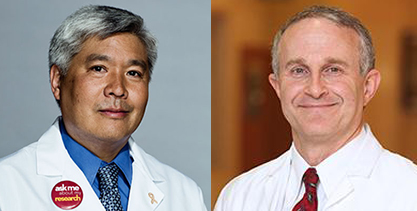
Q: How do you think cancer research will change in the next 10-20 years?

The increased collection of clinical information will lead to increased numbers of specific, potential directions to pursue unlike in the past when any new direction was embraced and pursued. The future of cancer research will involve much more “virtual research” or informatics confirmation prior to pursing a direction clinically and the need to work together to identify cancer patients with shared “personalized cancer data” for innovative targeted or personalized treatments. Read More

Member Feature: Masonic Cancer Center

July 1, 2015:

A conversation with Douglas Yee, MD, director, and Jeffrey Miller, MD, deputy director, of the Masonic Cancer Center, University of Minnesota, which is a member of the Big Ten Cancer Research Consortium (Big Ten CRC):

Q: How do you think cancer research will change in the next 10-20 years?

Douglas Yee, MD (DY): In the coming years, patients will see more precise and personalized therapies due to targeted tumor profiling. Personalized medicine is the wave of the future, and we’re excited to have some incredibly strong researchers in areas like bone marrow transplant, NK cell research, and cell products.

Jeff Miller, MD (JM): Here at the Masonic Cancer Center, we are addressing this shift by investing resources into space, equipment and most importantly, recruitment of talent for a new Translational Genomics in GI Tract Cancer (TGG) team. By creating a transdisciplinary team focused on a common goal, backed by extensive support and infrastructure, we plan to be intentional about finding answers to therapy resistance, for example. Read More

University of Illinois

University of Illinois

Indiana University

Indiana University

University of Iowa

University of Iowa

University of Maryland

University of Maryland

University of Michigan

University of Michigan

Michigan State

Michigan State

University of Minnesota

University of Minnesota

University of Nebraska

University of Nebraska

Northwestern University

Northwestern University

Penn State University

Penn State University

Purdue University

Purdue University

Rutgers State University

Rutgers State University

University of Washington

University of Washington

University of Wisconsin

University of Wisconsin

University of Illinois at Chicago

University of Illinois at Chicago

© 2026 All rights reserved.

Big Ten Cancer Research Consortium
7676 Interactive Way, Suite 120, Indianapolis, IN 46278

email: info@bigtencrc.org    phone: 317–921–2050