OnCore Login

Member Features

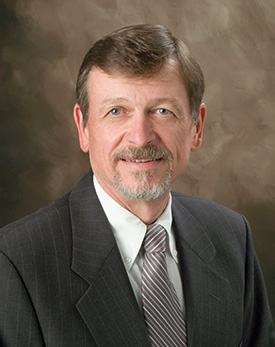
Member Feature: Fred & Pamela Buffett Cancer Center

June 1, 2015:

A conversation with Kenneth H. Cowan, MD, PhD, director of Fred & Pamela Buffett Cancer Center (University of Nebraska), which is a member of the Big Ten Cancer Research Consortium (Big Ten CRC):

Q: How do you think cancer research will change in the next 10 or 20 years?

Cancer research will move toward precision cancer medicine. Using genomics and other new diagnostic tools, we will be able to employ precision medicine to customize therapies, care for each cancer patient individually, and ultimately improve outcomes. We are investing more efforts into personalized treatments including a partnership with IBM to conduct early testing and feedback for IBM’s Watson Genomic Analytics program. In minutes, the program identifies relevant mutations and potential drugs that may be considered in a treatment regime – all based on the patient’s genomic profile and the specific mutations. The Fred & Pamela Buffett Cancer Center is one of 14 leading cancer institutes to partner on the project. We’re really proud to have this program as part of our research and treatment planning options. Read More
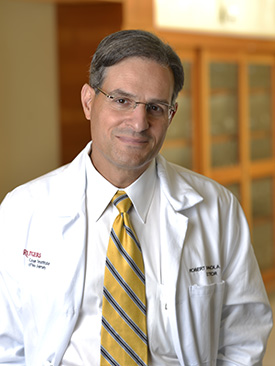
Member Feature: Rutgers Cancer Institute

May 1, 2015:

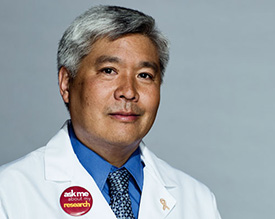
A conversation with Robert S. DiPaola, MD, director of Rutgers Cancer Institute, which is a member of the Big Ten Cancer Research Consortium.
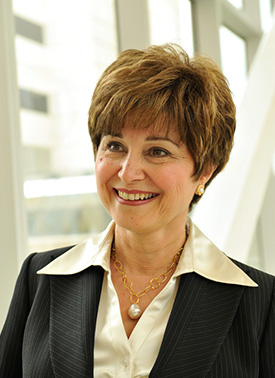
Q: How do you think cancer research will change in the next 10 or 20 years?

Over the last 20 years, the development of powerful new technologies was instrumental in what we have come to understand about the complexity and heterogeneity of cancer, from the role of genetic mutations to the behavior of our immune systems.

The accomplishments of the last 20 years, more than any other period in cancer research, have set the stage for remarkably accelerated progress over the next 20 years, by teams that push the limits of what we imagined “multidisciplinary” could mean. Precision medicine teams that are working to create combination therapies to target the multiple genetic mutations in any individual cancer patient include physicists, mathematicians, and computer scientists. The challenges we face in understanding large-scale outcomes of such targeted therapies will require cooperation among research, clinical care, government, and insurance institutions. As our understanding of the biology of cancer and the human genome continues to evolve, our ability to create tailored treatments for patients and prevention strategies for well populations will improve dramatically. Read More

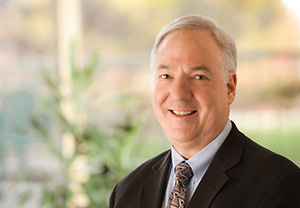
Member Feature: University of Michigan Comprehensive Cancer Center

April 2, 2015:

A conversation with Maha Hussain, MD, FACP, FASCO, associate director of clinical research at the University of Michigan Comprehensive Cancer Center, which is a member of the Big Ten Cancer Research Consortium.
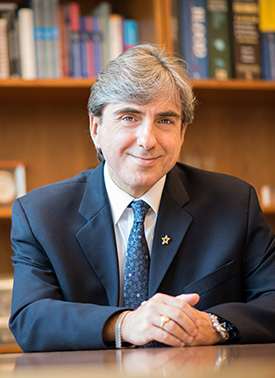
Q: What kind of impact do you see the Big Ten Cancer Research Consortium having on cancer clinical trials?

Conquering cancer requires impactful research that is efficiently implemented and evaluated in clinical trials that are timely, appropriately designed, and skillfully performed and analyzed. This requires team effort.

Collaborating with other institutions allows for a broader and deeper brain trust while allowing the efficient testing of novel concepts and approaches in a more representative patient population. The synergist interactions, the collaboration, the implementation — all are aimed at one ultimate goal: Making a real difference for patients and their families. Read More

Member Feature: Robert H. Lurie Comprehensive Cancer Center of Northwestern University

March 2, 2015:

Leonidas Platanias, MD, PhD, director of the Robert H. Lurie Comprehensive Cancer Center of Northwestern University

A conversation with Leonidas Platanias, MD, PhD, director of the Robert H. Lurie Comprehensive Cancer Center of Northwestern University, which is a member of the Big Ten Cancer Research Consortium.

Q: What kind of impact do you see the Big Ten Cancer Research Consortium having on cancer clinical trials?

Our member institutions each have unique strengths and resources; the Big Ten Cancer Research Consortium (Big Ten CRC) provides the necessary structure to use those resources to the best advantage and expedite the development of effective, innovative clinical research. The consortium’s ability to streamline processes from clinical trial design to implementation expands opportunities for our cancer centers to make the most of limited funding. In addition, the Big Ten CRC’s focus on collaboration will help ensure that young investigators receive mentorship and support to advance their concepts and develop new therapies. Read More

Member Feature: Michigan State University Breslin Cancer Center

Feb. 1, 2015:

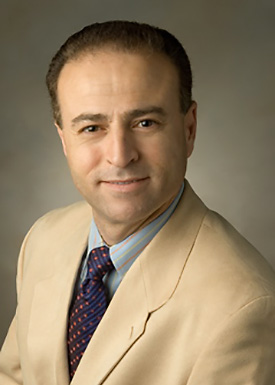
A conversation with Anas Al-Janadi, MD, medical director of the Michigan State University Breslin Cancer Center, which is a member of the Big Ten Cancer Research Consortium.

Q: What does the Michigan State University College of Human Medicine Breslin Cancer Center’s membership in the Big Ten Cancer Research Consortium mean for the patients you and your colleagues serve?

Cancer is a devastating disease, and the fight against cancer can only be won by teaming up to fight this merciless enemy. Our patients now can have the cutting edge research that is expected to be created and launched by the consortium members. The diversity and unique strength of each institution will now come together in order to deliver on the promise to our patients who can now find the most promising clinical trials in their own community. The MSU Breslin Cancer Center always has and continues to partner with communities throughout the state. Through our membership in the Big Ten CRC, we can also extend the offerings of clinical trials to all of our partners. Read More

Member Feature: University of Illinois Cancer Center

Jan. 1, 2015:

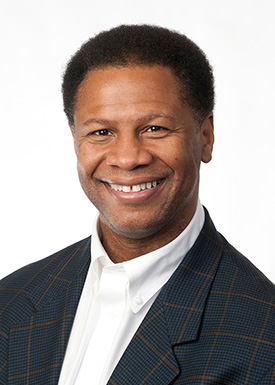
A conversation with Robert A. Winn, MD, interim director of the University of Illinois Cancer Center, which is a member of the Big Ten Cancer Research Consortium.

Q: What kind of impact do you see the Big Ten Cancer Research Consortium having on cancer clinical trials?

On our own, we each have characteristics that demonstrate who we are individually and in the context of our institution. In the context of the Big Ten CRC, our consortium harnesses the clinical expertise of 12 leading cancer centers specifically related to breast, GI, GU, GYN, hematologic, melanoma, and thoracic malignancies. Additionally, this is a fascinating time to be conducting cancer clinical trials: there have been many advances in molecularly driven therapeutics, and these have led to the evolution of adaptive and basket-designed trials. This presents an incredible opportunity for us to build greater collaborations that otherwise wouldn’t exist. I think it goes beyond looking at ideas from other institutions. It’s looking at what each institution is actually doing and how are we going to work with them or find a way for them to work with us. This includes diversifying the populations we bring to clinical trials that the Big Ten communities serve, and diversifying the education that we can provide for our students. We each have this niche and whether it’s being able to bring in a specific population, or exploring cancer from a different perspective that we have in the past, or gaining access to a technology that we simply don’t have – this is the benefit of these relationships and the collaboration that comes with a consortium. It allows us to continue doing what we are doing, but to also expand that to our network and see what else can be brought to the table and what can benefit this research that we might not be thinking of. Someone else might have that one piece of the puzzle. Read More

Member Feature: Holden Comprehensive Cancer Center

Dec. 1, 2014:

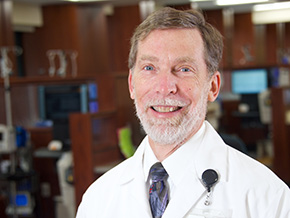
A conversation with George Weiner, MD, director of Holden Comprehensive Cancer Center at the University of Iowa and the C.E. Block Chair of Cancer Research and professor of internal medicine at the University of Iowa. Dr. Weiner has led a statewide collaborative to reduce the burden of cancer in Iowa, served on committees within the National Cancer Institute, and just began a two-year term as president of the Association of American Cancer Institutes (AACI), which comprises 92 leading cancer research centers in the United States.

Q: What kind of impact do you see the Big Ten Cancer Research Consortium having on cancer clinical trials?

Every one of our institutions has an outstanding group of experts from a variety of specialties who work together to develop and test new ideas related to cancer prevention, early detection, and treatment. Can you imagine the difference we can make if we partner together? We will be able to share and test ideas quicker. It is imperative for us to do so. Research advances have demonstrated that cancer is much more complex at the molecular level than previously imagined. In essence, every cancer is unique and even the most “common” cancers are really rare cancers. This is both exciting and challenging. It is exciting because we are learning the best way to take care of cancer patients. It is challenging because finding enough patients who have the same molecular makeup to test new and promising treatments will be more difficult. To design better treatments in the future, scientists have to collaborate more than ever to assess our ideas. Working together, to partner on studies is going to be key to advance cancer medicine. Different from many other study consortia, the Big Ten Cancer Research Consortium will allow these multicenter trials to be done with a nimble organizational structure for optimal efficiency and scientific input. Read More

Member Feature: Masonic Cancer Center

Nov. 1, 2014:

A conversation with Douglas Yee, MD, director of the Masonic Cancer Center, which is a member of the Big Ten Cancer Research Consortium.

Q: What strengths does the Masonic Cancer Center bring to the consortium?

At the University of Minnesota and at the Masonic Cancer Center, there is a very collaborative atmosphere. We act collectively with the goal to change cancer outcomes, versus looking to finish a task solely on our own. The leadership here will bend over backwards to help each other because that ultimately helps patients.

For example, I work mainly on breast cancer, and a colleague of mine focuses on HIV. He has studied mechanisms of resistance to HIV therapy and noticed that mechanisms involved in HIV drug resistance might also be implicated in the breast cancer mutational process. After confirming the similarities, and specifically a role for APOBEC3B, we received additional funding for further work on the role for this protein in the development of endocrine resistant breast cancer. Collaborating with colleagues in medicinal chemistry, we are developing small molecule inhibitors of APOBEC3B. If we can develop a drug to target this enzyme, then the consortium would be an ideal place to conduct the clinical trial validation. Everyone on this campus, no matter the center or school, thinks about how they can contribute to curing cancer. Read More

Member Feature: Purdue University Center for Cancer Research

Oct. 1, 2014:

A conversation with Timothy L. Ratliff, PhD, Robert Wallace Miller Director of the Purdue University Center for Cancer Research, which is a member of the Big Ten Cancer Research Consortium.

Q: What kind of impact do you see the Big Ten Cancer Research Consortium having on cancer clinical trials?

pccr-logoThe collaborative interactions among Big Ten cancer centers will enable more rapid testing of new therapeutics. In truth, the whole is greater than the parts. By combining forces, multiple institutions will participate in clinical studies, patient accrual will occur more briskly and, therefore, outcomes will be determined more rapidly. Read More
Member Feature: University of Wisconsin Carbone Cancer Center

Sept. 1, 2014:

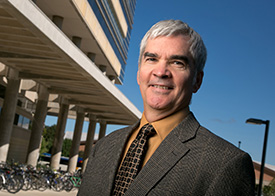
A conversation with Howard Bailey, MD, interim director of the UW Carbone Cancer Center, which is a member of the Big Ten Cancer Research Consortium. Dr. Bailey, a professor of medicine, is a medical oncologist who specializes in gynecologic oncology and cancer prevention. He has led the development of three different state- and nation-wide clinical research networks to expand the access of “cutting edge” treatment for patients.

Q: What kind of impact do you see the Big Ten Cancer Research Consortium having on cancer clinical trials?

Without a doubt, the Big Ten Cancer Research Consortium will offer accelerated advancement when moving science into groundbreaking clinical trials. The consortium forms a strong collaboration because of the cancer advances each Big Ten institution has already made and the research infrastructures in place at each location. And we know the consortium will leverage and grow the existing relationships among cancer centers in development of clinical trials. This is a win-win for all of these institutions and more importantly, for all cancer patients that will be affected by the novel treatments of tomorrow. Read More

University of Illinois

University of Illinois

Indiana University

Indiana University

University of Iowa

University of Iowa

University of Maryland

University of Maryland

University of Michigan

University of Michigan

Michigan State

Michigan State

University of Minnesota

University of Minnesota

University of Nebraska

University of Nebraska

Northwestern University

Northwestern University

Penn State University

Penn State University

Purdue University

Purdue University

Rutgers State University

Rutgers State University

University of Washington

University of Washington

University of Wisconsin

University of Wisconsin

University of Illinois at Chicago

University of Illinois at Chicago

© 2026 All rights reserved.

Big Ten Cancer Research Consortium
7676 Interactive Way, Suite 120, Indianapolis, IN 46278

email: info@bigtencrc.org    phone: 317–921–2050