
June 17, 2026: This month, Across the Consortium highlights the clinical research contributions Big Ten cancer centers made during the American Society of Clinical Oncology (ASCO) Annual Meeting as well as some unique research programs that are paving the way for future clinical breakthroughs. In addition, we celebrate significant milestones across the Big Ten, from NCI designation renewal to new collaborations that will change the course of clinical care.
But first, we are pleased to annouce registration is now open for the Big Ten CRC Summit on Friday, October 2. Register at: bigtencrc.org/summit.





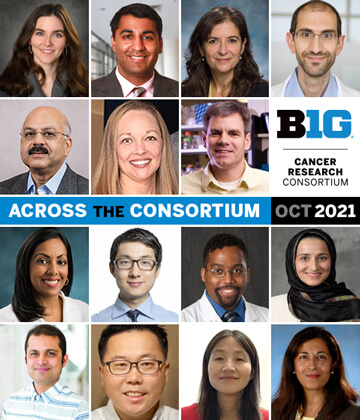 In this month’s Across the Consortium, the Big Ten Cancer Research Consortium highlights several investigators involved in detecting, decoding, and understanding genetic abnormalities as well as a potential drug target for treating aggressive pancreatic cancer and a tumor cell that may potentially stop tumor cell seeding and block cancer progression in breast cancer. We also feature a married couple at Penn State Cancer Institute that are building a research program using the MRIdian LINAC by Viewray, a Magnetic Res Magnetic Resonance Imaging (MRI)-guided linear accelerator, one of only 18 units currently open in the U.S. Learn about recent appointments, news grants, and more across our member institutions.



Subscribe to the Big Ten CRC Newsletter X
X Facebook
 YouTube